Summative vs Formative Assessment in AP and SAT Prep Contexts
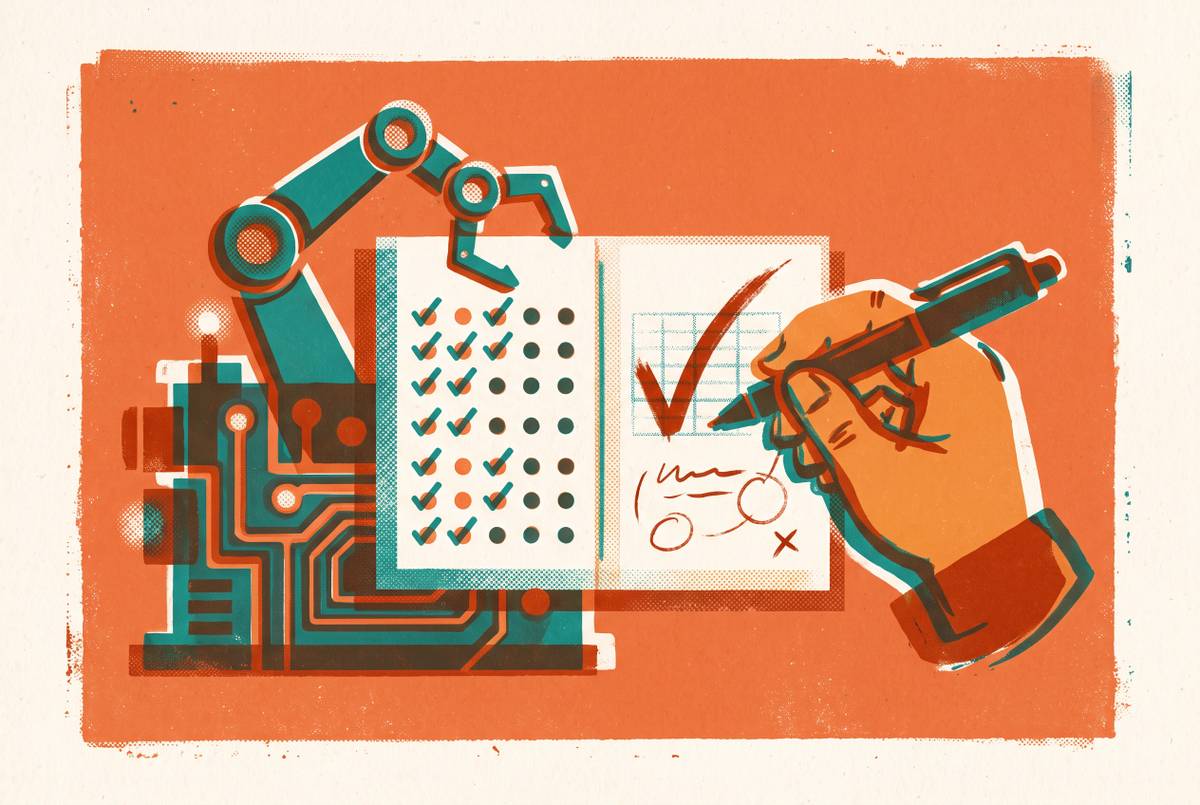
Formative feedback shapes learning; summative scores only measure it after the fact.

Formative and summative assessment sound like education jargon, but the difference is simple. Formative is the practice that happens during learning, low stakes, meant to catch problems early. Summative is the verdict that happens after, high stakes, meant to certify what a student actually knows. In AP and SAT prep, mixing these up, or leaning too hard on one, is probably the single most common reason smart, hard-working students still underperform on exam day.
The shorthand version, borrowed from decades of education research: formative is assessment for learning. Summative is assessment of learning. One is a mirror. The other is a grade.
That difference isn't just semantic. Formative feedback is descriptive: it tells a student what went wrong and what to do next. Summative feedback is a number: a score, a grade, a line on a transcript that colleges and credit committees will read. And because summative scores carry consequences on transcripts that colleges and credit committees will read, formative work only functions if students feel safe being wrong in front of it. Nobody takes intellectual risks when every wrong answer counts.
Neither one works alone. Research summarized by Yale's Poorvu Center (drawing on Trumbull and Lash, 2013; McLaughlin and Yan, 2017; King, 2023) makes the case that formative assessment actually boosts performance on the summative exams that follow, alongside gains in motivation and metacognition. So this isn't a debate about which type matters more. It's a question of how to sequence them so each one does the job the other can't.
Why the AP exam and SAT function as the ultimate summative benchmarks, and what that means for everything leading up to them
Both the AP exam and the SAT are about as summative as assessment gets. High-stakes, one-shot, scored against a fixed standard, with real consequences attached: college credit on one side, admissions decisions on the other.
Consider how an AP course actually runs. From day one, the May exam is the organizing fact of the entire year. It sets the pacing calendar, dictates which topics get emphasis, and defines what "done" even means for a unit. Everything before it exists in service of that one sitting.
The SAT works the same way, just compressed into a single morning. One sitting, standardized conditions, a score that follows a student into the college admissions process.
The numbers show what's at stake. In 2024, the mean AP score sat at 3.12, and more than 60% of all exams taken scored a 3 or higher, a common threshold colleges use for credit consideration. Flip that around: 40% to 50% of exams in recent years landed at a 1 or 2, missing the credit opportunity entirely.
Here's the structural problem with treating the exam as the whole plan. A summative test, by design, does nothing to fix instructional gaps before they become permanent. Results often don't even arrive until after the school year has ended, which means there's no window left to act on what the data shows. The test tells you what happened. It cannot tell you what to do differently, because by the time it speaks, there's nothing left to do.
That limitation is really the whole premise of this article. If the exam only reports outcomes, something else has to do the work of shaping them beforehand.
The summative instrument itself is changing. AP exams in 2025 moved primarily to Bluebook, the digital testing platform, and more than 90% of surveyed students found it easy to use. That's not a footnote. If the format of the final test is shifting, the formative practice leading up to it needs to shift too, or students walk in prepared for a test that no longer exists.
One data point makes this vivid. AP Physics 1's pass rate jumped from 47% in 2024 to 66% in 2025, following a hybrid redesign of the exam format. That's not a fluke of an easier test. It's a reminder that summative design and formative preparation are linked. Change one, and the other has to catch up.
How formative assessment closes the gap the summative exam cannot
If the summative score arrives too late to fix anything, the fixing has to happen earlier, in the formative stage, while there's still time to change course.
Benjamin Bloom's mastery learning framework is the clearest model for how this works. The cycle: a brief unit assessment, targeted corrective instruction based on what that assessment reveals, another round of formative checking, then completion. Simple loop. Repeatable.
The key detail most people skip past: it's not hearing the correct answer that produces learning. It's the hard thinking that happens in the gap between attempts. A student who takes a quiz, gets the answer key, nods, and moves to the next quiz hasn't done anything formative at all. That's just summative testing on repeat, minus the grade.
The research backing this up is blunt. Reviews of mastery learning concluded that few educational interventions of any kind produce achievement effects as large and as consistent as mastery learning does, and that entire approach runs on formative feedback loops. Students in these programs also reported better confidence and more positive attitudes toward learning, not just higher scores.
Translate that to AP and SAT prep: doing more practice problems is not the same as improving. The formative loop requires actual feedback, a clear look at where thinking broke down, and a genuinely different approach before the next attempt. Repetition without correction just rehearses the mistake.
How AP Classroom structures formative practice in the official prep ecosystem
AP Classroom launched in 2019 as the official digital platform built around this exact problem, giving teachers and students structured formative tools tied directly to the course. It breaks into four main pieces.
AP Daily Videos, short lessons on individual topics, good for targeted review rather than full re-teaching. Topic Questions, practice items tied to specific course content with immediate feedback. Progress Checks, unit-level assessments combining multiple choice and free response, designed as a checkpoint before a class moves on. Question Bank, a searchable, filterable set of real AP questions, sortable by topic, skill, difficulty, and question type. This is arguably the strongest tool in the set, because it lets a teacher build an assessment aimed at exactly the gap a class is showing.
The online assessment format inside AP Classroom closely mirrors the actual Bluebook testing experience, a detail that matters more than it seems. That means formative practice is doing double duty, building content mastery while also building familiarity with the format students will face in May.
The Personal Progress Dashboard rolls results up unit by unit and skill by skill, giving a visual readiness map: steady here, improving there, still red over there. Before this kind of dashboard existed, differentiating instruction by class section was nearly impossible. Now a teacher can assign a specific question type to the specific section that's struggling with it.
One constraint is worth stating plainly, because it protects the whole system. Per the official Course and Exam Description, Personal Progress Check results cannot be used to evaluate teacher performance or assign letter grades. Misusing them this way puts a school's authorization to offer AP courses at risk. That rule exists for a reason: the moment a formative tool starts carrying grade weight, students stop taking risks with it, and the entire mechanism collapses.
The system also has to move when the exam moves. For the AP Psychology redesign in 2024-25, new question bank items were built alongside the new exam format itself: fewer multiple-choice questions, four answer choices instead of five, two new free-response question types, and a fully digital delivery. Formative tools that don't evolve with the summative exam stop being useful fast.
Teachers planning ahead should note that AP world language exams, covering French, German, Italian, Spanish, Chinese, and Japanese, go fully digital in May 2027. That's a formative planning window, not just a future headline.
How AP teachers actually sequence formative and summative assessment across a course
Talk to teachers directly (as forums like the OER Project Teacher Community regularly do) and a pattern emerges: several formative check-ins per unit, roughly every three or four class sessions, building toward one larger summative assessment at the unit's end.
Inside that pattern, formative work takes a lot of shapes:
- Informal multiple choice and short answer checks
- Thesis statements, claim drafts, and SAQ responses turned in purely for feedback
- Short reading quizzes that keep pace with content rather than measuring mastery
The summative bookend looks different: DBQs, LEQs, full unit tests, higher time investment, higher weight in the gradebook.
One approach some teachers swear by: hold students to actual AP time constraints even during formative work, treating pacing as a skill that needs practice alongside content. The logic is that time pressure is itself a skill, and skills need practice just like content does.
Not every teacher draws a hard line between the two categories, though. Some AP Physics teachers take the opposite approach on purpose, treating every assessment as both a test and a learning opportunity. The formative and summative lines blur intentionally, because the correction process itself is where the learning lives.
That disagreement between teachers is actually useful to sit with. Some protect the psychological safety of formative work by keeping it clearly separate from anything graded. Others fold the two together and let correction do the work either way. What both camps agree on: the active ingredient is feedback and correction, not just repeated exposure to more questions.
For scale, consider what summative scoring actually looks like at the AP level: in 2025, more than 31,000 high school and college educators scored more than 20 million student responses using detailed, standardized rubrics. That's the level of precision the final exam demands. Formative practice that never touches those same rubric standards is training for a different test than the one students will actually take.
How SAT prep uses formative diagnostics to build a personalized path to the summative score
The SAT is now fully digital and adaptive: the test itself adjusts difficulty based on student performance as the exam progresses. That structural shift raises the cost of walking in with unaddressed skill gaps, because the test reacts to weakness in real time rather than just recording it.
Good SAT prep starts with a formative diagnostic, not a stack of practice tests. A short diagnostic identifies a student's current skill level across Reading and Writing and Math. From there, a personalized study plan prioritizes the areas where improvement will move the score the most, rather than marching through every topic evenly.
The loop looks like this: diagnostic (formative) leads to targeted practice on weak spots (formative), which leads to a full practice test (a summative simulation), which leads to re-diagnosis, and the cycle repeats. Each pass narrows the gap a little more.
There's a subtler point buried in the adaptive format itself. Because the digital SAT adjusts in real time based on how a student performs, the exam is functioning as a kind of formative instrument during the test itself, adjusting difficulty on the fly. But a student can only take advantage of that if they've actually practiced under adaptive conditions beforehand. Walking into an adaptive test having only ever practiced with static, fixed-difficulty questions is like training for a conversation by memorizing a monologue.
What effective formative feedback actually looks like in AP and SAT practice, and where most students go wrong
Nearly everyone falls into the same trap: take a practice test, check the answer key, note the wrong ones, move on to the next test. That's not formative learning. That's summative evaluation without a grade attached, which means it captures the diagnosis but skips the treatment entirely.
Real formative feedback does three things:
- Identifies the specific reasoning error or knowledge gap behind a wrong answer, not just the fact that it was wrong.
- Re-engages with that exact gap in a different way, not by re-reading the same notes, but by approaching the concept from a new angle.
- Tests that gap again, to check whether it actually closed.
Guidance from Yale's Poorvu Center frames this well: effective feedback is corrective and forward-looking, rather than purely evaluative. A grade tells a student where they stand. Corrective feedback tells them what to do about it.
For free-response work, AP essays, SAQs, DBQs, LEQs, generic commentary ("needs more detail") is nearly worthless. What actually helps is feedback aligned to the same rubric the summative exam uses to score it. Students need to internalize the evaluative standard itself, not just receive a verdict from it.
There's a metacognitive layer here too. Formative assessment builds a student's ability to know what they don't know, which sounds abstract until exam day, when accurate self-assessment is exactly what lets a test-taker allocate time wisely instead of freezing on a hard question or rushing through an easy one.
Tools built specifically around this kind of diagnosis (AI-powered platforms like Passionfruit, for instance) aim at this exact gap: not just marking an answer right or wrong, but identifying where the thinking actually broke down and what specific gap caused it. That's a meaningfully different job than a practice tool built for volume, and it's the difference between a formative loop that closes gaps and one that just generates more data.
How to use summative practice tests strategically without turning them into another high-stakes event
Full-length practice tests are summative simulations. They measure where a student stands at a single point in time. On their own, they teach nothing.
Running practice test after practice test without formative follow-up is a bit like retaking an exam over and over and hoping the score climbs through sheer repetition. The mastery learning research suggests that's about the least efficient way to spend prep time available.
A better approach:
Space full tests out, not weekly, so there's real time in between for formative work to actually shift underlying knowledge. Treat every missed question as a formative input, not a final verdict on ability. Run them under real conditions, actual AP time limits, the actual digital SAT format, so the simulation reflects the real thing.
That 40% to 50% figure of AP exams scoring a 1 or 2 in recent years says something important here: a lot of students are arriving at the summative event without having closed gaps that formative work could have caught earlier. The exam reveals the problem right when it's too late to fix it.
The cycle that actually works: full practice test, detailed error analysis, targeted formative practice on the specific weak spots that surfaced, a short check for understanding, then another full test later. AP Classroom's Progress Checks slot neatly into the middle of that cycle, a formative pulse-check between full simulations, without the full cognitive weight of another complete exam.
How teachers and schools can build a formative-summative structure that serves whole classrooms, not just individual students
Individual feedback loops matter, but classrooms need pattern detection at scale, and this is where digital dashboards genuinely change what's possible. A teacher looking at class-wide data might notice that most students are missing questions tied to experimental design, or that a specific calculus technique is tripping up half the room. That's a signal for a targeted mini-lesson, not a full unit re-teach.
Differentiation can happen at the section level too. Two sections of the same AP course can get different formative assignments, aimed at each section's actual weak points, something that was close to impossible before digital platforms made this kind of targeting practical.
The broader argument, echoed across assessment research, is for a hybrid model: neither formative nor summative testing alone meets the full needs of a school. Low-stakes, ongoing formative work tied tightly to the curriculum, paired with the high-stakes summative exam at the end, serves both the accountability side (colleges, credit, transcripts) and the learning side (actual skill growth) at once.
That structure matters more by the year, given that AP participation grew 7% from 2024 to 2025, rising in 36 AP courses and falling in only 4. More students in AP classrooms means more classrooms where the gap between formative practice and summative performance is live, and worth taking seriously, every single year.