AI-Powered SAT Tutoring Apps vs Traditional Tutors
Adaptive AI tools better mirror the real test, but human tutors excel at building metacognition.
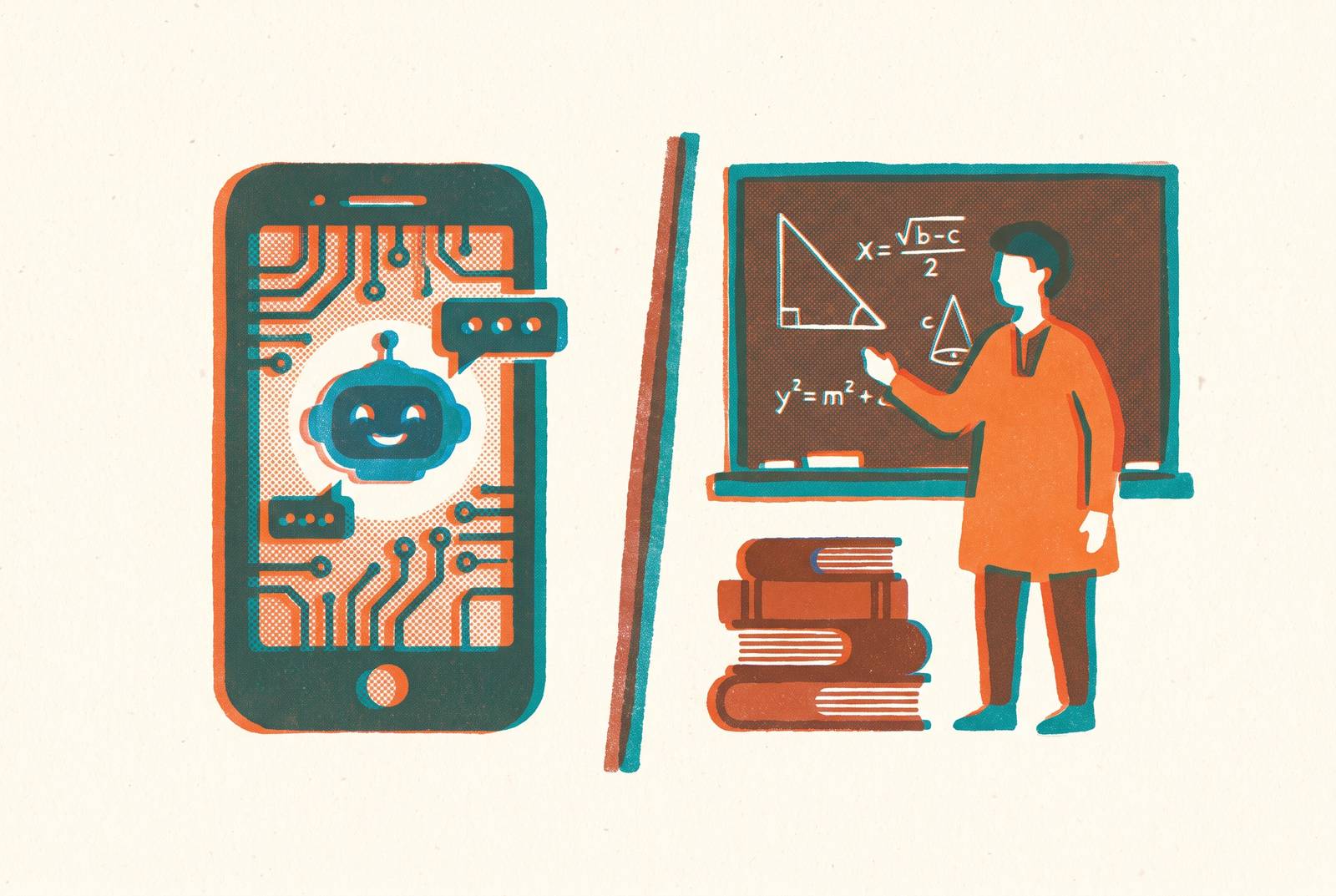
This piece looks at AI tutoring apps and human SAT tutors side by side, and the honest answer to which one is better depends on the student asking.
The test runs on a two-module structure, and the two modules don't behave the same way. A student who performs well on Module 1 gets routed into a harder Module 2, and that harder module is also the one that unlocks the higher score ceiling. A student who struggles on Module 1 gets a gentler Module 2, capped at a lower maximum score. The exam is quietly deciding, in real time, how high a student is even allowed to climb.
That changes what practice needs to do. A student who only works through a fixed set of printed questions, in a fixed order, at a fixed difficulty, never experiences the thing the real test does to them: the escalation or the easing-off based on how they're performing minute to minute. The distance gets covered, but the stamina the race actually demands never gets built.
The newer Digital SAT format also runs shorter overall, with shorter reading passages and a single question attached to each one, which asks something different of a student's attention than the older, longer-passage format did. Among the Class of 2025, 97% of SAT takers sat the digital version. Digital-first prep is now simply how the test works for nearly everyone taking it.
Those two facts together create a structural bias before any comparison of AI versus human tutoring even starts. Tools, AI-based or otherwise, that can mimic adaptive difficulty give students a more honest rehearsal of test day. Static prep books and tutoring built entirely around paper drills are working against the format the student will actually face.
What AI tutoring tools do under the hood
Before weighing cost or outcomes, it helps to know what an AI SAT tool is actually doing when a student opens the app. The strongest tools do three specific things that a generic chatbot or a static practice app does not. They diagnose which question types a student is actually weak on. They explain why an answer is right or wrong, not just which letter to bubble. And they generate more practice specifically in the areas that would move the score, rather than cycling through a textbook's table of contents in order.
Adaptive knowledge-gap detection powers this, so a student drills their real weak spots, not a predetermined sequence someone else decided mattered.
That distinction matters because a lot of products calling themselves "AI tutors" are really just a generic language model wearing an SAT-prep skin. A student evaluating any specific product should be asking which job it's actually built for.
Teaching style is another place real variation appears, across how different tools approach instruction. Some tools take a Socratic approach, asking guiding questions instead of handing over the solution, which builds deeper understanding over time but can be maddening for a student who's stuck at 11 p.m. and just wants to see the worked example. Neither approach is wrong, but a student should know which mode they're getting before they commit to a subscription, because the wrong mode at the wrong moment just adds friction.
Platforms built around this kind of adaptive logic, tools that adjust difficulty in real time based on how a student is performing instead of defaulting to a linear drill sequence, are training students on the actual cognitive demands of the two-module format described above. Passionfruit Learning's AI-generated practice questions and performance analytics are one example of this approach: matching the shape of practice to the shape of the real test, rather than hoping the overlap happens by accident.
Where AI tutoring tools fall short for SAT students
None of this means AI prep is a finished product. It has three structural limitations specific to SAT outcomes: weaker motivational support than a person provides, limited ability to adapt in real time when a student is genuinely confused rather than just under-practiced, and a real risk that leaning on it too heavily weakens a student's own problem-solving muscles.
Start with adaptability, because it's the most concrete. A 2025 study found that AI tutoring followed fairly predictable response patterns and had trouble adjusting when a student needed more explanation, a redirection, or extra scaffolding to get unstuck. An AI system can hand over more practice problems. It can't always tell that the practice problems are being solved with a broken method.
There's also a longer-term concern worth taking seriously. For test prep specifically, that risk lands harder than it would elsewhere, because the SAT is a closed-book, no-assistance, sit-alone-under-a-clock exam. Whatever habits a student built while prepping are the only habits available on test day.
None of this is an argument for skipping AI tools. The honest reading is that these limits are reasons to use AI with intention, and to know when bringing in a human changes the outcome for a specific student at a specific stuck point.
What a traditional human tutor provides beyond the price tag
A good human tutor isn't just a more expensive way to deliver the same explanations an app gives. The real value sits in three places: coaching a student on how to think about their own thinking, building the kind of trust that keeps a student showing up, and making real-time judgment calls about what this particular student needs next.
That first piece connects directly to the adaptability gap from the last section. Human tutors ask richer questions, follow up adaptively based on what a student just said, and walk through instructional steps that build metacognition, the skill of thinking about one's own thinking. That happens to be the exact meta-skill the SAT tests under time pressure, since the test isn't really asking "do you know this fact" so much as "can you catch your own error in ninety seconds."
Motivation is the second piece, and it's underrated because it's hard to put a number on. A student who would quietly close an AI tutoring app at 10 p.m. because it's late and nobody's watching will often push through a session scheduled with a tutor they respect and don't want to let down.
Tutors also diagnose problems that have nothing to do with SAT content directly. A student who doesn't need more practice at all, who needs someone to actually believe they can hit their target score. A person sitting across from that student can notice which of these is actually happening and adjust the whole approach, not just the next problem set.
None of that comes free. Traditional SAT and ACT tutoring rates vary widely by format and by the tutor's experience level, and a full engagement with a top-tier human tutor can run as high as $10,000. That cost opens up an access gap: a family that can write that check gets a resource that a family without it simply doesn't.
The concrete tradeoffs across budget, learning style, and distance from a target score
None of the above settles which option is "better," because better depends on three things specific to the student: what the family can spend, how the student actually learns, and how far the student currently sits from the score they want.
Budget is the most obvious variable, so start there. That gap is structural, and it shapes who even gets to consider the top end of the human-tutor market. For a family that genuinely cannot absorb a few thousand dollars in tutoring costs, a well-designed AI tool is the only option on the table that still offers genuine diagnostic depth, and it quietly solves a second problem too: a strong tutor two hours away is useless to a rural student, while an app works the same in a city and in a town with one stoplight.
Budget isn't only about the sticker price, either. Three sessions with a human tutor might cost roughly what three months of a monthly AI subscription costs, and a student who needs daily practice over those three months gets a lot more total preparation out of the subscription than out of three isolated sessions, however good those sessions are.
Learning style is the second variable, and it cuts in a different direction than budget does. A student who works well with immediate feedback, who likes setting their own pace, and who doesn't mind iterating quietly through mistakes tends to do well with AI tools. A student who needs someone checking in on them, who responds to encouragement from a person rather than a notification, or who has a misconception a machine keeps missing, tends to get more out of human contact. Even within AI tools, style matters: a Socratic tool that asks guiding questions fits a student who already has a decent foundation and is refining it, while a tool that gives direct walkthroughs fits a student who's stuck and needs to see the method once, clearly, before they can take over. A student who defaults to copy-paste habits may need a human in the room enforcing structure the app can't enforce on its own.
Distance from the target score is the third variable, and it often decides the other two. A student sitting close to their target, where a handful of specific weak question types stand between them and the goal, is usually well served by an adaptive AI tool that can find those weak spots and hammer them directly. A student sitting far below target, especially one with a foundational gap in algebra or reading comprehension that predates SAT prep entirely, often needs a human tutor to find the actual root cause. An AI tool can flag that a student keeps missing a certain question type. It's not always equipped to notice that the real problem is a misunderstanding from three years ago, sitting underneath every one of those missed questions.
These three variables don't operate independently. A tight budget can push a student toward AI tools even when their learning style would favor a person. A large score gap can justify stretching for a human tutor even on a tighter budget, because the cost of staying stuck is higher than the cost of the sessions. The honest approach is to weigh all three together rather than defaulting to whichever option is easier to picture.
AI SAT tutoring tools worth knowing in 2026
The AI SAT tutoring market in 2026 isn't one thing. Tools differ in how deep their diagnostics go, what teaching method they use, what they cost, and who they're actually built for, so the smarter move is matching the tool to the student rather than grabbing whatever gets the most ads.
Passionfruit Learning is built around a specific idea: that a student needs to understand where their knowledge actually breaks down, not just rack up more hours of practice. The underlying premise is that real mastery means knowing what you don't know yet, and having an actual plan to fix it, which fits students at any budget level who want gap detection that goes deeper than a simple right-or-wrong tally, and fits teachers who want that same diagnostic depth across a whole classroom.
Whiz, and its paid tier Whiz Pro, has the most generous free offering in the category. The free tier includes unlimited SAT, PSAT, and ACT practice exams along with topic-level practice at no cost. Whiz Pro runs about $20 a month as of 2026, cheaper on quarterly or annual plans, and unlocks an AI tutor, step-by-step guidance on every question, a personalized "Road to 1600" course, and AP exam support with AI grading. It fits a cost-sensitive student who wants to try the product thoroughly before spending anything.
R.test, built by the South Korean ed-tech company Riiid, specializes in a fast adaptive diagnostic. It estimates SAT, ACT, PSAT, or AP scores quickly using adaptive testing, producing a result from roughly 30 questions in well under an hour, and it points to the specific concepts that need attention. It fits a student who wants an accurate baseline fast, before committing to a longer prep program.
Prep Expert AI Tutor is built on a curriculum with a track record behind it, the same curriculum credited with helping a large number of students raise SAT scores and win substantial college scholarships, priced as a monthly subscription.
Horton Test Prep takes a hybrid approach, pairing AI identification with human-designed methodology. Its AI component identifies missed problems, adapts the way the real SAT does, and re-presents a missed question four or five problems later with the numbers switched, a built-in check for genuine mastery rather than a memorized answer. It fits a student who wants a low-cost platform with real spaced repetition built into the question flow.
EdisonOS is aimed less at individual students and more at the tutors and coaching institutes serving them. It replicates the Bluebook testing interface screen by screen, backed by a large bank of vetted questions and a substantial library of full-length SAT mock exams, plus analytics a tutor can use to pinpoint exactly where a student needs more work. It fits an independent tutor or a coaching institute that wants to offer digital SAT prep at scale without building that infrastructure from scratch.
Even the best AI tool among these works best paired with intention. A student benefits from knowing their platform's real strengths, fast feedback and endless scalable practice, while staying aware of its limits, especially the moment a fundamental misconception needs the kind of real-time redirection a human tutor still does better than any app currently on the market.
Sources
- iacis.org
- Effectiveness of AI-based tutoring and assessment systems in mathematics education: a systematic review
- When Does AI Help Most With Tutoring? What Emerging Research Says
- The Missing Evaluation Axis: What 10,000 Student Submissions Reveal About AI Tutor Effectiveness
- Improving Student Learning with Hybrid Human-AI Tutoring: A Three-Study Quasi-Experimental Investigation
- AI tutoring can safely and effectively support students: An exploratory RCT in UK classrooms