SAT prep apps with diagnostic feedback loops vs. question-bank-only tools
Adaptive tools with real knowledge modeling outperform static question banks on the Digital SAT.
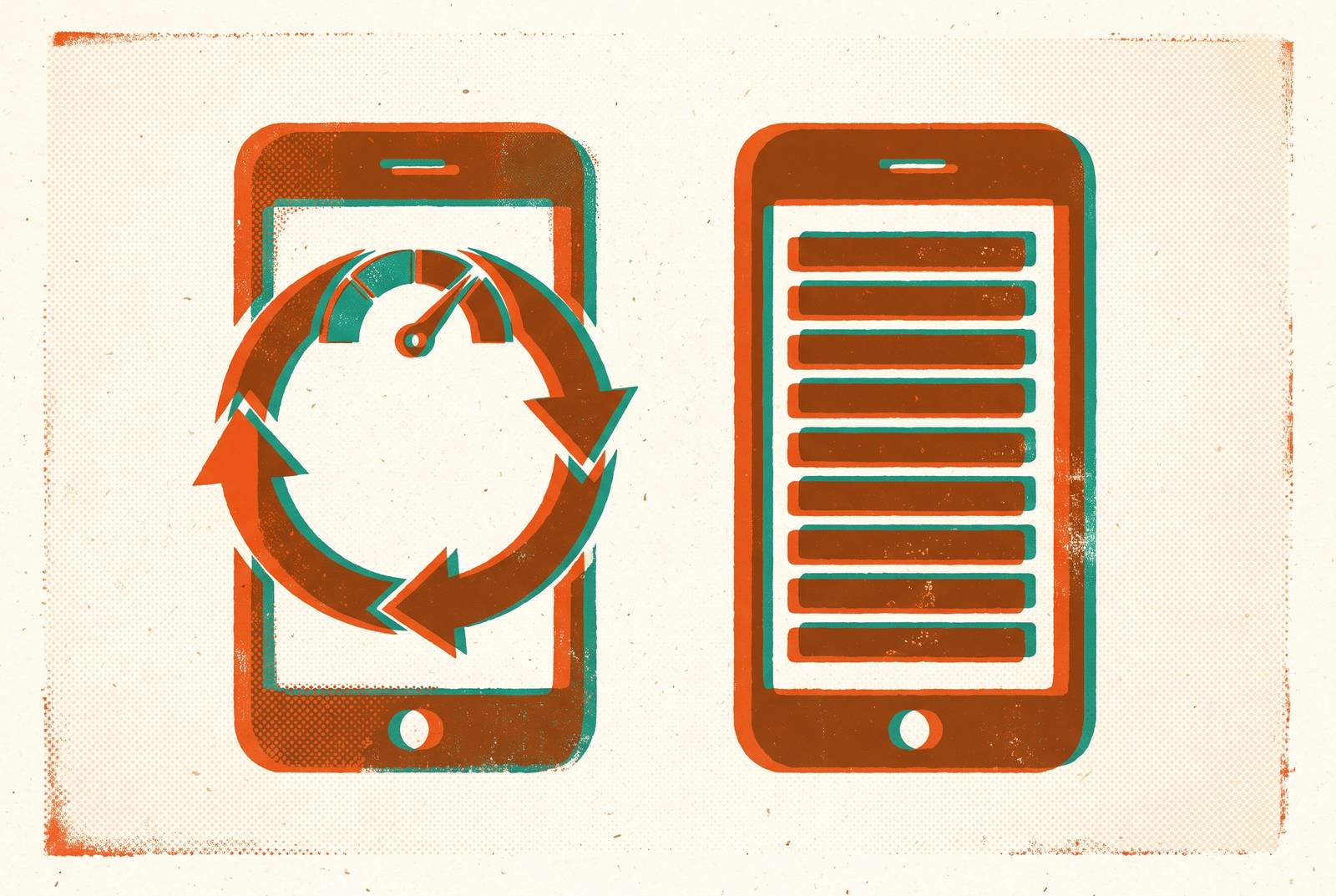
The Digital SAT is not a PDF version of the paper test with a timer bolted on. It runs on a multistage adaptive design. The first section a student sees measures them in real time and decides what comes next. Module 1 mixes easy, moderate, and genuinely hard questions on purpose. The goal is not to cover content. The goal is to get an early read on ability.
That early read has consequences. How a student performs on Module 1 determines which version of Module 2 they get, an easier one or a harder one, and that routing decision caps or opens up how high their score can go. If you miss too many questions early, you get a gentler second module with a lower ceiling attached. Scoring well gets a student a harder module that can carry them into a higher band.
The engine behind this is Item Response Theory (IRT), a scoring model that continuously estimates a test-taker's ability as they answer, rather than just tallying right and wrong at the end. IRT is the same psychometric framework used in professional credentialing exams, the kind that license nurses and accountants. Applying that framework to a college entrance exam means the test behaves less like a worksheet and more like a conversation that updates its next question based on your last answer.
Module 1 is the event that decides what race you're running next.
What question-bank-only tools train students to do
The test adapts, and most of the tools built to prepare students for it do not. A static question bank, no matter how well-organized, gives you a fixed, linear set of problems. The Digital SAT doesn't work that way, so a student training exclusively on a fixed set is training for a format the exam no longer uses.
Most SAT apps are still built around the same basic structure: a big pile of tagged questions, sorted by topic and difficulty, that a student works through in whatever order they choose. That structure teaches pattern recognition. It gets a student familiar with how a geometry question is phrased or what a reading passage trap usually looks like. What it does not teach you is the specific skill Module 1 actually demands: you need to perform accurately enough under uncertainty to earn the harder, higher-scoring version of Module 2. That's a different muscle than content recall, and no amount of drilling a static bank builds it.
This gap appears in a student's thinking before it appears on a score report. Learning science has a name for what happens when practice feels productive but lacks depth or adaptivity: the illusion of competence. You can rack up high accuracy on familiar, untimed, self-selected drills and walk away convinced you're ready, when what you've actually built is confidence in a format the real test won't give you. The Dunning-Kruger pattern applies directly here. Confidence rises faster than actual skill when the feedback a student gets is shallow.
The content gap widens further once the format gap is layered on top of it. A linear practice test cannot simulate the specific pressure you feel when Module 2's difficulty shifts based on what you just did in Module 1. That pressure, the sense that this next question matters structurally and not just for your streak, is something students only rehearse if their prep tool mimics it. Most don't. So students show up on test day having never practiced the exact adaptive mechanism that will determine their ceiling.
What separates a real diagnostic feedback loop from a label
"Adaptive" has become one of those words that appears on nearly every SAT prep product page and means something different each time. What gets called adaptive in EdTech marketing mostly has nothing to do with the Computer Adaptive Testing logic that actually powers the Digital SAT. Filtering questions by topic tag and calling it personalized is not the same as modeling what a student knows.
Genuine adaptive learning does three things at once: it adjusts question difficulty, it adjusts which topics come next, and it adjusts how deep an explanation needs to go, all based on demonstrated mastery rather than a pre-set sequence. If any one of those three is missing, what's left is topic filtering dressed up in adaptive language. A real feedback loop needs all three components working together: an accurate read on where a student actually stands, continuous adjustment of what they study next, and explanations that build conceptual transfer instead of just confirming a right or wrong answer.
The research backs up why this distinction isn't just semantic. A 2024 scoping review in Heliyon looked across adaptive learning platforms and found that measurable score gains occurred only when a platform implemented genuine knowledge modeling. If a platform wore the adaptive label without that underlying structure, it showed no real advantage over plain static question delivery. The label alone didn't move the needle. The modeling did.
The counter-evidence is real and should temper any instinct to treat "adaptive" as automatically superior: in a randomized controlled trial in Dutch secondary schools, adaptive practice produced no average test score gain over static practice, and for higher-ability students, static practice actually worked better. The same research noted something stranger still: students in one adaptive condition reported lower interest than students doing static practice, possibly because the adaptive feedback made them feel like they had less control over their own learning.
Does that undercut the whole argument for adaptive tools? Not quite, and the distinction matters. Those findings describe specific implementations rather than the entire category. What they actually confirm is that the word "adaptive" guarantees nothing on its own. A platform can call itself adaptive and still fail to produce better outcomes if the underlying modeling is thin. The operative variable was always whether the system is actually diagnosing, adapting, and explaining, or just rotating which questions it shows you.
Passionfruit Learning's Knowledge Gap Detection and the Feedback-Loop Logic
Passionfruit Learning starts from a premise that follows directly from the research above: drilling more problems isn't the fix if the tool can't tell you why you're getting them wrong. The platform is built around a knowledge model rather than a static bank, tracking not just whether an answer was right or wrong, but what the error pattern reveals about the specific concept a student hasn't locked down yet.
That diagnostic depth is paired with unlimited, high-quality practice problems and AI-powered grading, which solves a structural problem static banks can't avoid: a finite pool of questions eventually runs out, and a student who's seen every question in a bank is no longer being tested, just recalling. Because Passionfruit Learning's practice supply isn't capped, the diagnostic process just keeps running instead of hitting a wall.
The grading layer handles the explanatory half of the work. Instead of flagging an answer as simply incorrect, the AI calibrates feedback to where the student's reasoning actually broke down, which is the explanatory piece that the Heliyon review identified as necessary for real transfer. A generic "incorrect" doesn't teach a student anything about their thinking. A targeted explanation of where the logic went sideways does.
The structural parallel to the Digital SAT itself is direct. Module 1 functions as a diagnostic event that determines what a student sees next, and Passionfruit Learning's study flow follows the same logic: it starts by genuinely assessing where a student currently stands, then routes them toward the highest-yield gaps rather than marching them through a fixed syllabus in a fixed order.
The same approach scales past the individual student. Teachers and schools using Passionfruit Learning can see class-level patterns emerge, so the same concepts tripping up the same students across a roster get identified systematically instead of guessed at from test scores alone. So instruction becomes targeted instead of uniform, aimed at the specific students who need a specific concept retaught rather than a blanket review for everyone.
What separates this from a tool offering a library of videos or a menu of topics to pick from is that the value sits in the diagnosis itself and the plan generated from it. A student doesn't have to guess which video to watch next. The system has already done that work by locating where the actual gap is.
Where other adaptive tools in the field fit
The feedback-loop approach isn't unique to one platform. Several tools in the current SAT and AP prep market build toward genuine diagnostic logic, though they vary a lot in how deep that modeling goes, who they're built for, and how wide their scope is.
AlphaTest runs an IRT-based short-form diagnostic: a 20-question assessment that maps a student's SAT readiness across domains, standing in for the 3-to-4-hour baseline mock exam that's traditionally been the starting point for prep. Its Weakness Conqueror engine auto-detects error patterns by topic and serves up targeted drills, and a separate Mistakes feature recycles previously missed questions for review. An AI Tutor component leans on Socratic-style hints and stepwise explanations instead of just handing you an answer key, so it aims to build conceptual transfer rather than memorization. The platform also runs Accelerated AI Prep Bootcamps that adjust a student's daily study plan in real time based on mastery level and how much time is left before test day, and it backs all of this with a bank of over 5,200 practice questions sorted by difficulty and topic, alongside full-length and 20-minute mini adaptive simulations. AlphaTest markets score-improvement figures on its own pages, which should be treated as a vendor claim rather than independent evidence. Best fit: individual students who want to move quickly from a baseline diagnostic to an actionable study plan without committing to a full-length practice exam first.
EdisonOS takes a different shape. It's built for tutors and test prep businesses, not individual students, priced on a tiered annual subscription that starts with a Basic early-bird tier and scales up to a higher-cost Pro tier. Best fit: tutoring centers or test prep businesses managing multiple students at once, who need analytics dashboards and parent-facing reporting rather than a single-student study app.
Jenova's AP Exam Tutor covers a different exam category. It's an AP-specific AI agent spanning all 40 AP subjects inside one platform, and it carries persistent session memory across subjects and sessions, retaining exam dates, diagnostic scores by subject, which units a student has already mastered, and where they consistently lose points on free-response questions. If a student logs in the night before an exam, the system has already built up months of context, so it prioritizes exactly the concepts that matter most given what it knows. Its adaptive teaching mode shifts between Socratic questioning, timed drills, and strategic review depending on where you stand. Best fit: students juggling prep across multiple AP subjects who want one platform that holds continuity over a long prep arc instead of starting fresh each session.
EduSageAI is a general AI grading platform aimed at teachers, adaptable for AP History LEQ grading specifically. Teachers can input the full College Board LEQ rubric, covering thesis, contextualization, evidence, and analysis and reasoning, and the platform applies it consistently across every submission. Its comments tie back to specific rubric language instead of generic writing feedback, and it includes batch processing along with Google Classroom integration. Best fit: AP History teachers managing large sections who want rubric-consistent grading with fast turnaround.
GradingPal claims high OCR accuracy for handwritten submissions, covering AP scoring guideline rubrics across essay, FRQ, and math problem sets, with Google Classroom integration spanning high school and AP contexts. Best fit: teachers who regularly receive handwritten student work and need both digitization and rubric-based scoring in one step.
CoGrader, an AI essay grader, runs on what it calls an auditability-before-release workflow: the teacher sees the AI's reasoning before anything gets sent to a student, with the ability to adjust or override it first, a pre-release transparency feature not common among comparable tools. Best fit: teachers who want to keep editorial control over AI grading rather than letting automated scores go out unreviewed.
Evaluating an Adaptive Tool: What to Watch For
"Adaptive" functions as a marketing category at least as much as a technical one, so the decision to invest time or money in a tool should rest on a handful of specific, testable questions rather than a feature list or a score-improvement claim on a landing page.
Start with how long it takes to get a useful read on where a student stands. A tool that needs a three-plus-hour mock exam just to establish a baseline is testing endurance, not practicing feedback-loop logic. AlphaTest's diagnostic, by contrast, identifies weaknesses in under 30 minutes, which is closer to what a genuine short-form IRT assessment should look like.
From there, ask whether the tool changes what a student studies next based on demonstrated mastery, or whether it only filters by topic tag. Those sound similar but aren't. Topic filtering just narrows a pile of questions down to a category. Knowledge modeling tracks what a wrong answer reveals about a specific conceptual gap and builds the next step from that.
The explanation a student gets after a wrong answer matters just as much as the question selection. Feedback that explains why the reasoning broke down builds transfer. Feedback that just restates the correct answer doesn't, no matter how quickly it arrives.
Pool size is another practical test. A finite, static bank of questions has a ceiling a student will eventually hit, after which they're recognizing questions rather than being tested on them. A system that regenerates practice and recalibrates as mastery shifts doesn't run into that wall.
Finally, ask whether the tool actually simulates the adaptive structure of the Digital SAT, including the real consequence that Module 1 performance has for Module 2 difficulty, or whether it just presents questions in a fixed linear order regardless of how a student is doing. That last question cuts to the heart of everything this piece has argued. A test that adapts in real time deserves a prep tool built on the same logic.