Free AP Practice Resources Versus Paid Prep Tools
Official AP resources are free but hit a wall where students need personalized feedback.
Free AP resources are not a loose pile of worksheets someone posted long ago and forgot about. They form an actual ecosystem, official in origin, coordinated in structure, and strong enough at content delivery that most students never need to look past it for that piece of the work.
AP Classroom sits at the center of that ecosystem. It's the official hub for every AP course, and it comes free with AP course enrollment. None of this is a third party's guess at what College Board wants. It's built by the same organization that writes the exam.
Behind that sits another free layer: official released free-response questions and their scoring guidelines, posted publicly for the three most recent years of administrations. These are real questions that real students answered, graded against the same rubrics AP readers used that year. No login wall, no fee, no watered-down approximation of the real thing.
Around the edges of the official material, informal resources fill in texture the official channels don't bother with. Reddit's AP Students community, for instance, works as a kind of crowd-sourced map of pain points, the units that wreck most students' scores, the free-response prompts that trip people up every year, and the pacing mistakes visible only in hindsight. It won't replace a structured study plan, but as orientation, as a way of knowing where to aim attention before diving into content, it earns its place.
Put together, this is a genuinely strong foundation. If the free ecosystem were sloppy or incomplete, the story would just be "free resources are bad." It isn't that simple, and the real story starts with where this strong foundation stops short.
The access constraint most students don't know about until it's too late
AP Classroom's best features come with a catch that a lot of students don't discover until they've already lost time looking for a workaround: you need a school-issued join code to get in.
That join code isn't handed out to anyone who wants to study. It requires enrollment in an AP course through a school, or through an approved homeschool provider that has completed the AP Course Audit.
The students locked out are exactly the students who need the free ecosystem most. So the gap isn't just "no official practice questions": a student without that access also has no official way to know which topics they're weak on, no performance tracking, and no data trail showing where study hours should go.
For self-studiers locked out of AP Classroom, AI-powered exam-prep platforms like Passionfruit Learning offer an alternative entry point, AI-graded practice paired with performance analytics that don't require a school-issued code to access. That matters because losing access to content also means losing access to feedback. It compounds into the feedback gap the next section covers: a student with no join code has no official record of their practice performance, and no one grading their free-response answers either. Two gaps, same students, stacked on top of each other.
Why the free-response feedback loop is the gap that costs points
Content coverage was never the weak point in free AP prep. The weak point is feedback, specifically on free-response questions, and specifically the step where a student needs to know why an answer lost points, not just that it did.
Reading a rubric is one skill. What it doesn't do is sit next to a student's actual answer and point out which of those elements is missing, half-formed, or present but poorly connected. That interpretive step, turning a rubric into a diagnosis of one specific piece of writing, is left entirely to the student. Most students aren't equipped to do that for their own work, for the same reason writers struggle to edit their own drafts: they know what they meant to say, so they read it as if they'd said it.
The consequence doesn't announce itself. Each individual attempt just looks like a middling score. Nothing points back to the repeated cause.
Teachers face the same wall at a larger scale. Grading at that volume, with that level of rubric detail, is not sustainable on a teacher's schedule, and the real-world result is that practice frequency gets cut roughly in half by spring, right when students need more repetitions, not fewer.
The student-side gap and the teacher-side gap aren't separate problems. They reinforce each other. Fewer FRQs means less feedback and less practice at the same time, compounding in exactly the direction that hurts students closest to the exam.
Subject difficulty, student baseline, and the gap's decisiveness
None of this means free prep is doomed to fail every student. Whether the free-response feedback gap actually costs someone their target score depends on three things specific to that student's situation, and getting the read wrong in either direction has a real cost: overpaying for prep you didn't need, or walking into an exam with a historically low 5-rate underprepared.
Free prep can get a student to a 4 or a 5 when three conditions line up: the subject itself has a relatively high 5-rate, the student already walks in with a strong content baseline, and the student can accurately self-diagnose errors without outside feedback. Missing any one of those three changes the math.
Subject difficulty alone varies enormously across the AP catalog. AP Physics 1 has stayed well below the 5-rate that AP Psychology typically posts, so a free-study plan that produces a 5 in Psychology can leave a student stuck at a 3 in Physics 1, using the exact same number of study hours. According to College Board distributions, AP Psychology test takers passed at a high rate, while AP Statistics showed a noticeably lower share of students passing, with roughly one in five scoring a 1. AP Precalculus, by contrast, reached a notably high 3+ pass rate. Lined up together, these three cases show that a single, uniform free-study strategy doesn't work applied across the board. What works for Psychology doesn't transfer cleanly to Statistics.
The hardest variable to judge honestly is self-diagnosis. A student already scoring in the 4 range on early practice exams is in a much better position to close the last stretch without expert feedback than a student starting from a 2, or a student self-studying a subject their school doesn't even offer. The student most convinced they know what they're missing is sometimes the one least able to see it.
This comes into sharp focus during the five-week April push, when the exam shifts from a distant date to an actual deadline. A focused review using AP Classroom materials first, followed by a full-length timed practice exam around week three, followed by targeted drilling on whatever weaknesses that practice exam reveals, can still move a score meaningfully in that window. But that plan only works if the student can correctly identify which gaps are worth the remaining hours. That's not a knock on free resources. Some do. Plenty don't, and there's no shame in that, it's just a different starting position that calls for a different plan.
Where paid AI tools outperform free resources
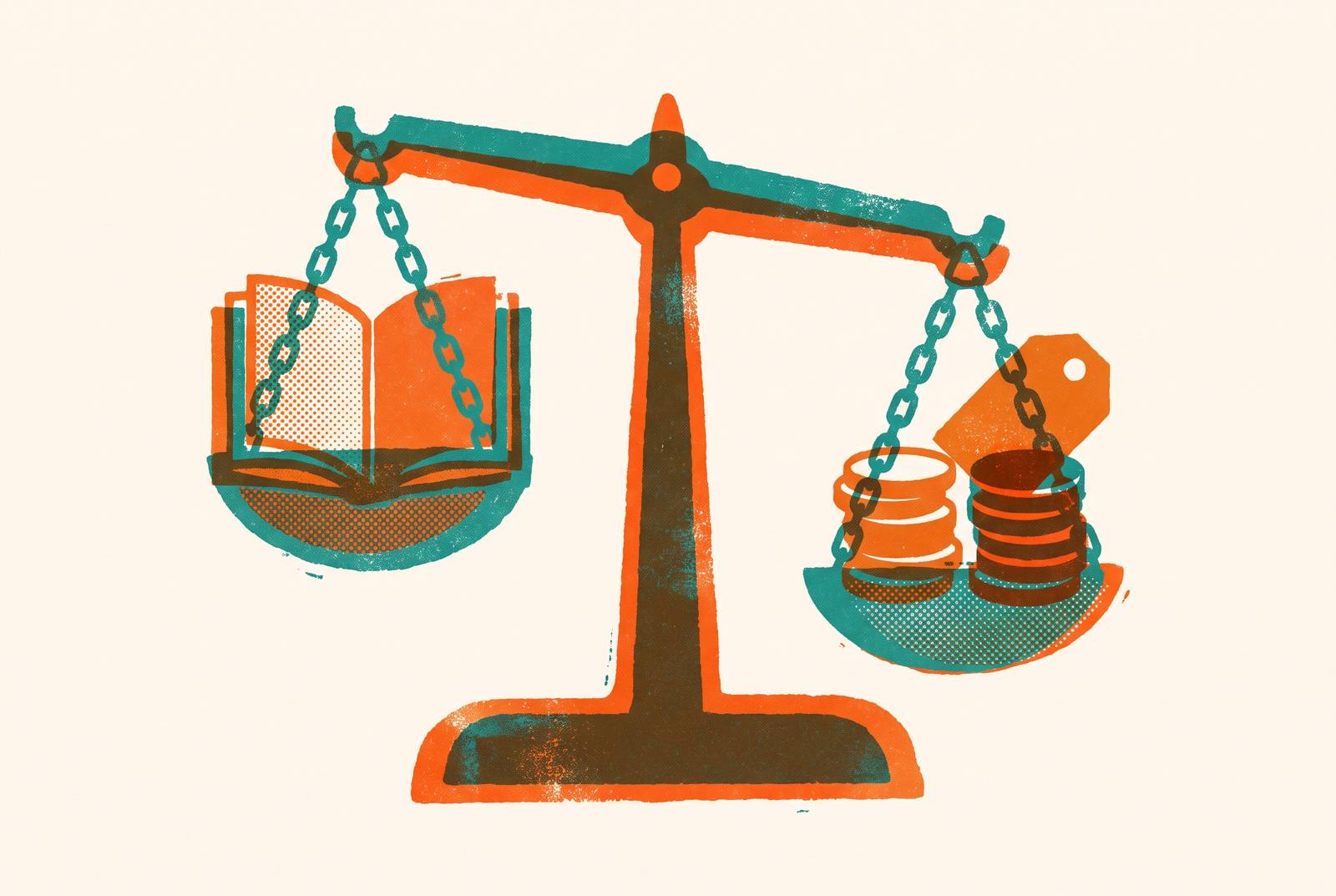
Paid AI tools don't compete with free resources on content volume. They compete on a different axis entirely: the feedback loop that free resources structurally can't provide. Three specific capabilities fill that gap, rubric-aligned FRQ scoring, adaptive unit-by-unit weakness mapping, and personalized study prioritization, and each one solves a distinct piece of the problem described above.
Start with FRQ scoring. A rubric by itself tells a student what earns points in general. AI grading applies that same rubric to one specific student's specific answer, flags which elements were attempted, which were missed, and why. That's the step no free resource performs, because it requires reading the actual writing, not just publishing the standard against which writing gets judged. The interpretive gap between reading a rubric and applying it to your own work is precisely where AI-graded systems like Passionfruit Learning intervene: they apply the rubric to each student's answer and surface exactly which elements were missing, catching the kind of pattern a student would otherwise repeat for months without noticing.
Adaptive diagnostics solve a related but separate problem. Instead of re-studying material a student already knows cover to cover, these systems map weaknesses unit by unit and point study hours at whatever is most likely to move the score. That fixes the wasted hours built into undifferentiated review.
Personalized study plans take the diagnostic one step further, weighting what gets studied by how much that section counts on the actual exam and by the size of the gap detected. The result is practice ordered by what will actually move a score, rather than practice ordered by whatever chapter comes next in a textbook.
On the teacher side, this same capability set is changing how practice gets assigned in the first place. AI grading tools handle the scoring logistics that used to eat a teacher's week, they return feedback to students instantly, and they generate the kind of analytical insight that used to require a teacher doing it manually for every one of ninety students. For a growing number of students, the prep tool and the classroom tool are becoming the same thing, run by the teacher who already has it.
Passionfruit and the other paid tools worth knowing about
A handful of AI-native tools now deliver on these capabilities, each with its own emphasis, so picking the one that fills a student's actual gap produces better results than picking whichever one shows up first in a search.
Passionfruit is a reasonable starting point for most AP students and classrooms weighing this decision. It's built specifically for AP subjects and the SAT, with unlimited practice problems and AI-powered grading as its foundation, not an add-on bolted onto a flashcard app. Where it goes further is in what it tracks: instead of just logging which answers were wrong, it builds a picture of what a student actually understands, where their reasoning breaks down, and which specific gaps sit between them and mastery, then directs practice at closing those gaps. That stance, that drilling more problems without knowing where understanding actually fails is close to wasted effort, directly addresses whether a student can self-diagnose without outside feedback. It's built to work for an individual self-studier and for a teacher or school trying to close gaps across a whole classroom, which makes it relevant on both sides of the access divide this article has walked through.
FRQuick takes a narrower, free approach, no signup required. In a published June 2026 benchmark across 141 human-graded AP essays, its scores landed within one point of a trained human reader the vast majority of the time. FRQuick was also named DC's top Track II project in the 2026 Presidential AI Challenge, built with the explicit goal of bringing fast, rubric-aligned feedback to students who can't afford private tutoring. The tradeoff is coverage: it currently supports AP Lang, AP Lit, and the major history essay exams (APUSH, AP European History, AP World History), which makes it a strong fit for those specific subjects and not a general-purpose solution.
MaxYourScore covers much more ground subject-wise, all 40 AP subjects, for $49.99 a year on its annual plan. It bundles AI video lessons, spaced-repetition flashcards built on the SM-2 algorithm, five full practice exams per subject, and an always-on Socratic AI tutor. That tutor is built to never hand over a direct answer. It asks guiding questions instead, which suits a student trying to build actual reasoning skill over one trying to get through a worksheet fast.
Crimsora takes a voice-first approach, with lesson plans mapped to AP course description units and coverage spanning AP, Digital SAT, ACT, and general school subjects. The live tutoring is advertised as unlimited but comes with a published fair-use cap on monthly voice sessions, an honest disclosure, though a student cramming several AP subjects in the final two weeks before May could realistically hit that cap. The named teachers on the site are AI personas with synthetic voices rather than human staff, the voice technology is licensed from a separate voice-tech provider per the site's own footer, and Crimsora discloses it is not affiliated with or endorsed by College Board or ACT. For a student who learns best by talking through material out loud, that voice-first design is a real advantage. For a student who won't actively engage with a conversational interface, it offers a lot less.
On the teacher-facing side, GradeWithAI is used by thousands of teachers for FRQ grading, and teachers using it report doubling their practice frequency without adding to their own grading time, directly reversing the spring slowdown described earlier. It identifies which specific rubric element each student attempted, the kind of granular diagnostic that hand-grading at scale simply can't sustain.
CS++ serves a narrower lane: AP Computer Science A and AP Computer Science Principles specifically. It grades a full class set of free-response questions in well under two minutes, aligned to the 2025–26 College Board CED rubric, with every score editable by the teacher before it's final. Classroom plan pricing is billed annually. It won't help a student or teacher outside those two courses, but for a Computer Science classroom, the speed and rubric alignment solve the exact scale problem AP Biology teachers run into every spring, just in a different subject.
Sources
- Best AI AP Exam Prep Apps 2026: Prices and Limits
- Is Free AP Prep Enough to Score a 5? An Honest Answer
- Best Exam Prep Apps 2026
- How Much Do Online AP Courses Cost? A Full 2026 Price Breakdown
- AI FRQ Grading for AP CSA & CSP Teachers · CS++
- FRQuick
- Best Free AP Essay Graders Compared (2026)
- AP Test Prep 2026: Videos, Practice Exams & AI Tutor