Conceptual Understanding vs Procedural Fluency in Math Instruction
Both skills reinforce each other; neither one works alone.
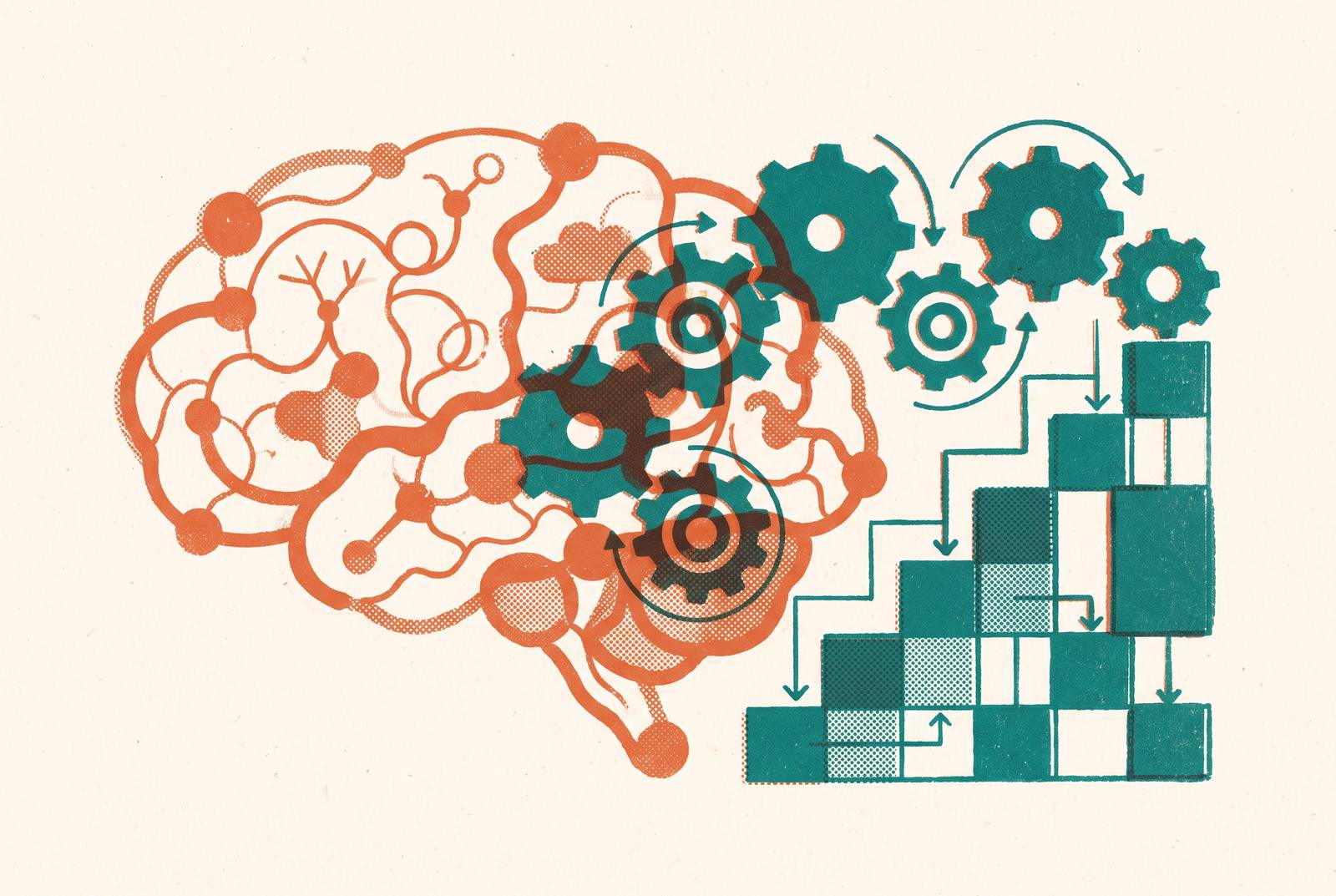
Picture two students working the same addition problem. Neither student is finished learning. The usual way this gets argued treats conceptual understanding and procedural fluency as two camps fighting for the same classroom time, as if a teacher has to pick a side and defend it. That framing misses the actual problem: these two skills depend on each other, and neither one does much good alone. The National Council of Teachers of Mathematics puts it simply: this isn't an either/or question, it's a both/and one. A student can't be fluent in something they don't understand, and understanding that never gets practiced runs into its own wall soon enough.
What each skill means and how they differ
Before going further, it helps to pin down what each term actually means, because the rest of this argument depends on keeping them straight. Conceptual understanding is knowing why the math works. Procedural fluency is a different animal. NCTM defines it as the ability to apply procedures efficiently, flexibly, and accurately, to transfer those procedures to new problems and contexts, to build or adjust a procedure when the situation calls for it, and to recognize when one method beats another. These two skills ask different questions of a learner. A student needs answers to both sets of questions, not just one. A student who blazes through a worksheet but falls apart the moment a number changes shape or a problem gets dressed up differently was never fluent to begin with. That's a different failure than slowness, but it's a failure all the same.
How conceptual understanding makes procedures stable and transferable
This is the part of the argument that carries the most weight: a procedure holds up under pressure when every step connects to a meaning, and it falls apart when it doesn't. Take regrouping in addition. But a student who understands that 15 ones can be renamed as 1 ten and 5 ones is working with a sturdier version of the same algorithm. That little mark written above the column isn't a magic symbol, it's a quantity, and knowing that makes the whole procedure less likely to collapse when the numbers get bigger or the format changes.
Fraction addition tells a similar story. Conceptual understanding doesn't just help here. It blocks the single most common error in fraction addition before it happens.
Equation solving works the same way. "Move the 7 across and flip the sign" is a shortcut that works until it doesn't. Shortcuts that look like expert behavior are only safe when they're compressions of something understood, not rituals copied without knowing what they protect.
The percentage example makes the stakes obvious. The arithmetic isn't the problem. The gap is conceptual: the second 20% is operating on a new, larger base, and a student who doesn't see that will keep making this mistake no matter how fast they can multiply. The trouble compounds later, when more advanced material assumes the earlier ideas were understood.
Why fluency still matters
None of this is an argument against practice. Understanding without fluency runs into its own kind of wall, usually involving working memory. Picture a student who genuinely understands ratio as a concept but has to stop and reconstruct basic multiplication facts one at a time. All that mental effort gets spent on low-level computation, leaving very little attention left over for the structure of the actual problem. Fluency matters here because dependable, low-effort procedures free up the mental space that reasoning needs to operate.
Long division shows this clearly. A student can understand division as a grouping process, fully, and still get lost somewhere inside a four-digit calculation if the mechanics aren't automatic. Understanding what division means and being able to carry out a long division problem reliably are two different achievements, and one doesn't substitute for the other.
Procedural fluency itself has more than one dimension. Kilpatrick and colleagues, in their 2001 work, describe procedural fluency as one of five strands that make up mathematical proficiency. Their point is that fluency does real work: students who have it can use that reliability to gain further insight into the concepts themselves, because fluency frees up the capacity that reasoning depends on.
The relationship runs both ways: how practice deepens understanding
The influence doesn't move in one direction only. Procedural knowledge is the sequence of steps a solver moves through, while conceptual understanding is the grasp of the core ideas and symbols behind those steps, and research on this relationship shows the two feed each other continuously. Kilpatrick and colleagues' 2001 findings, drawn from research on Model-Facilitated Learning, note that students with strong procedural fluency often gain fresh insight into the underlying concepts simply by doing the procedure. The practice itself becomes a form of teaching. NCTM treats this connection as non-negotiable: every student deserves instruction that links concepts and procedures.
Flexibility, the skill of choosing the most appropriate strategy for a given problem, draws on both kinds of knowledge at once and is treated repeatedly as a core goal in math education research worldwide. And the integration of the two skills appears to be its own distinct competency, not just the sum of its parts. Research measuring mathematical problem solving found that conceptual understanding's effect on a student's ability to integrate procedural and conceptual knowledge together was stronger than procedural fluency's effect on that same integration. Understanding, in other words, does more of the work of tying the two together.
What procedure-first instruction costs students as math gets harder
Procedure-first teaching can look like it's working for a while. Students get the right answers, tests go fine, everyone moves on. Then the material gets harder, and the gap appears in how students handle unfamiliar problems. Students who've only learned procedures tend to struggle the moment a problem looks unfamiliar or a step slips from memory. Students who built real conceptual understanding develop a kind of flexible thinking that keeps serving them as the math keeps changing shape.
Research on linear functions and equations bears this out directly: students' procedural fluency on this material consistently outpaces their conceptual understanding, and their ability to combine the two is weak. That combination is exactly where performance tends to break down.
Any classroom has four kinds of students, and the distinction reshapes how "wrong answers" should be read: those with a correct answer and correct reasoning, those with a correct answer but wrong reasoning, those with an incorrect answer but correct reasoning, and those with both wrong. A student in that third group, wrong answer, sound reasoning, is closer to real understanding than a student in the second group who got lucky with a flawed process. Grading that only checks the final answer can't tell these groups apart, and that's a structural blind spot, not a minor inconvenience.
What better instruction looks like in practice
Fixing this starts with how a lesson is built. The "I do, we do, you do" model of direct instruction has students memorize a sequence and reproduce it, which runs directly against the goal of building real concepts. Inquiry-based, student-centered teaching does the opposite: it gives students room to explore a problem, struggle with it productively, put their reasoning into words, and connect it to what they already know.
Representations matter too. Manipulatives, diagrams, and virtual models can make the structure of a problem visible before a student ever meets the symbolic version of it. Research on Model-Facilitated Learning backs this up directly: students who built their own rules and formulas through exploration with a virtual model ended up with stronger conceptual understanding and stronger procedural fluency than students taught the conventional way.
None of this is easy to run well. Teaching for conceptual understanding takes deep content knowledge and the ability to respond to a student's thinking on the spot, connecting whatever they just said to the underlying concept in real time. A scripted, procedure-first lesson doesn't ask a teacher to build that kind of flexibility. And none of this argues against practice itself. The goal is structured, well-designed repetition that makes procedures dependable, built on a conceptual foundation.
AP exams versus the SAT
Both AP exams and the SAT ask for conceptual understanding and procedural fluency, but they ask for those things in different proportions and in different formats, and treating prep for one like prep for the other is a real mistake. A student who can run the calculation but can't justify the steps in words will lose points on those free-response sections even when every number comes out right.
SAT Math works differently. Drilling only on SAT-style questions can wear down the conceptual depth that AP free-response demands.
The digital SAT's adaptive format raises the stakes on procedural efficiency specifically, not just understanding, because the clock doesn't wait for a student to reconstruct a concept from scratch. Picking the fastest safe method, and knowing why it's safe, is the same integration skill described earlier in this piece. It's the whole argument in miniature: a shortcut only works when it's resting on something understood.
How AI-powered tools are now targeting the integration gap
The recent push toward AI-driven personalization in math is a bet on one specific idea: that software can detect, close to instantly, whether a student's struggle is procedural or conceptual, and respond to that specific gap. Traditional right-or-wrong grading cannot make that distinction. AI systems are now being built specifically to close that blind spot.
The underlying architecture for a lot of this work is Knowledge Tracing, which estimates a student's mastery of specific skills by analyzing patterns across their problem history. A systematic review in Frontiers in Education found that supporting student learning is the most common application of AI in math right now, with systems offering conceptual explanations from multiple angles, step-by-step guidance through problems, and learning paths tailored across dimensions like metacognition, strategy use, and conceptual growth.
When a student uses an AI tool during an actual assessment, there's a real tension in what gets measured: some blend of the student's own ability and the tool's assistance, not the student's independent capability on its own. That creates a genuine evaluation problem traditional grading never had to solve, and it means any serious diagnostic system has to be able to tell AI-assisted performance apart from performance a student could produce alone.
What to look for in a tool that addresses both skills
A tool that actually helps with both conceptual understanding and procedural fluency has to do more than hand a student another worksheet. It needs to find the specific point where a student's thinking breaks down and respond to that exact gap. Passionfruit, built specifically around AP and SAT preparation, is designed around that idea directly. The platform offers unlimited practice problems paired with feedback aimed at specific knowledge gaps rather than just piling on more repetition, and it's built to serve individual students working alone as well as teachers trying to close gaps across an entire classroom.
Other tools in this space serve a genuinely different purpose. A grading-efficiency platform, for instance, helps instructors score and manage student work faster, which is a real and useful function, but it's a different job than diagnosing a student's conceptual gaps in real time and adjusting what that student sees next.
Anyone evaluating a math tool, whether for a classroom or for one student's own prep, should ask a short list of direct questions. Does the tool tell a procedural slip apart from a genuine conceptual gap? Does it adapt based on what a student doesn't yet understand, or does it just hand over more of the same content regardless? Does it support written, free-response reasoning, or does it only handle multiple-choice pattern matching? A tool that can't answer yes to these isn't doing the integration work this whole piece has been describing.
The practical upshot for students and teachers working toward mastery
Mastery in math means knowing what you actually understand, knowing exactly where your own thinking breaks down, and having a real plan to fix that specific spot. A student who can only run a procedure is one forgotten step away from falling apart on a harder version of the same problem. A student who understands why the procedure works can rebuild it, adapt it, or patch around a gap, and that's the kind of durability the research keeps pointing back to.
For students working through AP courses, this means leaning into free-response practice that demands written justification, not just a final number, because the exam is built to reward the student who can explain their reasoning, not just the one who can compute. For SAT prep, it means building procedural speed on top of a real conceptual foundation, so that a shortcut taken under time pressure is safe because it's understood.
For teachers, the shift is in what gets attention day to day. Watch the reasoning groups, not just who got the right answer. A student with a wrong answer and sound reasoning is standing closer to real mastery than a student with a right answer built on shaky logic, and a grading system that can't see that difference fails to measure understanding. High-quality practice paired with feedback that separates procedural stumbles from conceptual gaps gives both students and teachers a clearer picture of which bottleneck is actually in the way, and closing that gap is the real work of getting better at math.